
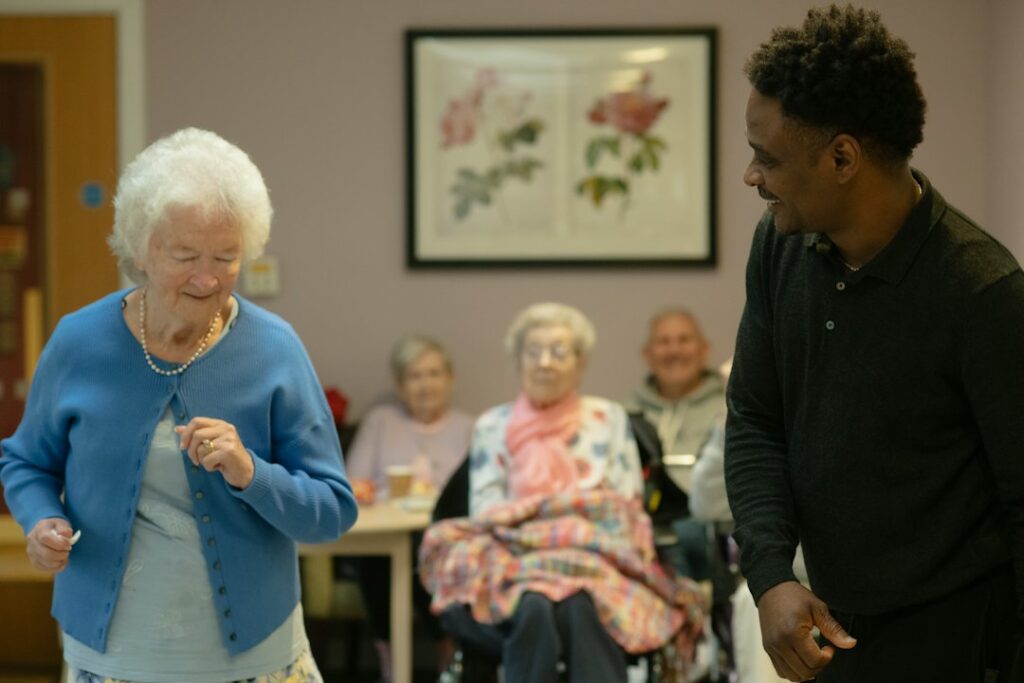
Assisted living events can help family members stay connected, understand daily life, and support a relative’s well-being. These events may include holiday gatherings, exercise classes, resident meetings, educational programs, religious services, arts activities, outdoor programs, or casual social hours.
Family participation does not need to be extensive or formal. A thoughtful visit, a shared activity, or a short conversation with staff can make an event more meaningful for the resident.
What role can a family member play at an assisted living event?
A family member can participate as a guest, helper, listener, encourager, or familiar source of support. The most appropriate role depends on the resident’s preferences, health, energy level, and comfort in group settings.
Before attending, ask what the event is designed to accomplish. A resident meeting may call for quiet listening, while a craft activity may invite hands-on participation. A family celebration may be more informal, but the resident may still need breaks or assistance moving through the activity.
Useful roles may include:
- Sitting beside the resident during a program
- Helping with materials during an activity
- Encouraging conversation with other residents
- Taking part in music, games, exercise, or crafts
- Helping the resident leave early if fatigue or discomfort develops
- Sharing relevant observations with staff after the event
The goal is not to take over. It is to support the resident’s involvement while allowing the event to remain their experience.
How should a family prepare before attending?
Preparation usually begins with a simple conversation. Ask the resident whether they want a family member to attend, what they hope to do, and whether anything about the event causes concern.
Confirm practical details in advance, such as:
- The date, time, and expected length
- Whether guests should sign in
- Whether seating is limited
- Whether food will be served
- Whether outdoor activities may be affected by rain, snow, ice, or cold temperatures
- Whether the resident needs a mobility aid, warmer clothing, or rest periods
- Whether photographs are permitted
Seasonal conditions can affect participation in this area, particularly during winter weather or periods of heavy rain. A family member may need to allow extra time for safe travel, bring appropriate clothing, or help the resident choose an indoor alternative.
Avoid promising that the resident will stay for the entire event. A flexible plan is usually more comfortable than treating early departure as a problem.
How can a family member help a resident feel comfortable?
Familiarity often reduces anxiety. Arriving a little early can give the resident time to settle before the room becomes busy. Sitting in a location that allows easy access to a hallway, restroom, or quieter area may also help.
During the event, use a calm pace and avoid rushing the resident through conversations or activities. Some residents may enjoy meeting many people, while others may prefer observing from the side.
Helpful approaches include:
- Introduce people one at a time rather than presenting a large group
- Repeat names and explain the activity without speaking in a childish manner
- Offer choices instead of giving repeated instructions
- Watch for signs of tiredness, frustration, pain, or overstimulation
- Allow the resident to decline an activity without pressure
- Use hearing aids, glasses, or communication devices as needed
- Keep conversation focused on the resident’s interests
A family member should speak directly to the resident whenever possible, even if staff are also present. This supports dignity and keeps the resident included in the conversation.
What if the resident has memory loss or communication difficulties?
Residents with memory loss may enjoy an event even if they cannot later recall attending it. The immediate experience—music, familiar faces, movement, or a pleasant conversation—can still provide comfort.
Family members can make participation easier by using short, clear statements and familiar topics. Instead of asking several questions at once, offer one simple prompt, such as asking whether the resident likes the music or would prefer to sit near the window.
If the resident becomes confused, avoid arguing about details. Reassurance, redirection, and a quieter setting may work better than correction. A family member might say, “Let’s sit somewhere calm for a few minutes,” rather than insisting that the resident remember why they came.
Staff should be informed about significant changes in mood, behavior, mobility, appetite, or communication. These observations may help the care team understand whether the event was comfortable and whether adjustments are needed.
How can family members participate without disrupting the event?
Family involvement is most helpful when it supports the event’s purpose and respects the needs of other residents. Follow the activity leader’s instructions, avoid private conversations during presentations, and keep personal disagreements away from the group setting.
It is also useful to remember that an assisted living event is not necessarily a family reunion. Other residents may have different abilities, preferences, cultural backgrounds, or comfort levels. Do not assume that everyone wants a hug, a photograph, or a conversation.
If a concern arises, wait for an appropriate private moment to discuss it with staff. Publicly correcting an employee, criticizing another resident, or debating care decisions in front of the group can make the resident uncomfortable.
Questions about medical care, medication, personal finances, or family conflict should generally be handled privately rather than during a social activity.

What should family members ask staff after an event?
A brief follow-up conversation can provide useful information without turning the event into a formal evaluation. Ask how the resident participated, whether they seemed comfortable, and whether anything should be changed next time.
Helpful questions may include:
- Did the resident appear engaged or overwhelmed?
- Did they need more breaks than usual?
- Were there mobility or hearing difficulties?
- Did they interact with other residents?
- Would a shorter visit or smaller group be better?
- Are there activities that match the resident’s interests more closely?
- Did staff notice any new concern that should be shared with the family?
Family members can also share observations from home visits. For example, if the resident has recently become tired more quickly, seems unsteady, or reacts strongly to noise, that information may help staff plan safer participation.
What are common mistakes to avoid?
The most common mistake is measuring success by how long the resident stays or how actively they participate. A resident who listens quietly for fifteen minutes may have had a positive experience.
Other mistakes include:
- Pressuring the resident to join an activity
- Speaking for the resident when they can answer independently
- Bringing too many visitors without checking first
- Arriving while ill or showing signs of infection
- Ignoring fatigue because the event is considered special
- Comparing the resident’s participation with another person’s
- Taking photographs without permission
- Treating a missed event as a sign of failure
A resident may decline because of pain, poor sleep, medication effects, hearing difficulty, or simple preference. Respecting that decision can be more supportive than insisting on attendance.
How can family involvement continue between events?
Participation does not have to end when the scheduled program is over. Family members can reinforce the resident’s interests through a short follow-up visit, a conversation about the activity, or a small personal routine connected to it.
For example, after a music program, a family member might discuss favorite songs. After an exercise class, they might ask how the resident felt afterward. After an art activity, they might display the resident’s work in a respectful way, if the resident wishes.
For households in Windber, maintaining regular contact may require planning around winter travel, work schedules, caregiving responsibilities, and changing daylight conditions. Consistency matters more than elaborate visits. A dependable pattern of participation helps the resident know what to expect and gives family members a clearer understanding of daily life in assisted living.
How can family members respect the resident’s independence?
The resident should remain the central decision-maker to the greatest extent possible. Family members can offer transportation support, companionship, or encouragement while still allowing the resident to choose whether to attend, where to sit, and how long to stay.
The most effective involvement is attentive rather than controlling. Notice what helps, ask what the resident prefers, and adjust plans as needs change. Assisted living events are opportunities for connection, but they are also part of the resident’s home life. Respectful family participation strengthens that sense of belonging.
